Black and red football in the Liberties
Oliver Bond Celtic FC connects a long standing Dublin 8 identity with boys and girls football, senior role models and a practical Law Society home venue.
Dublin 8 identity
Oliver Bond Celtic FC carries one of Dublin football’s most local names. The club identity points to Oliver Bond Street, the flats, the Liberties and the close network of families who recognise the black and red badge before they ever reach the pitch.
That local link matters for parents because the club is not just a weekend team name. It gives children from the Liberties a recognisable football home, while still placing them in the wider Dublin and District Schoolboys and Girls League pathway.
A 1947 crest with a clear local mark
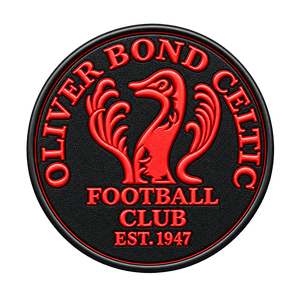
The crest gives the club a strong visual memory: a black circular badge, red lettering, a central swan and the EST.1947 date at the base. The badge is simple enough for young players to spot on kit and strong enough to sit beside older senior football stories.
The swan and red lettering have been preserved as the club’s visual anchor. That identity carries through the header colours, card accent and first panel so the club feels distinct from other Dublin sides with similar names.
Community roots around the flats
Oliver Bond Celtic’s strongest story is the way football has gathered families around the flats and surrounding Liberties streets. Parents, neighbours and former players have helped make the club a visible part of local weekends, especially for young players who want to represent their own area.
The club’s growth has been tied to children returning to a local team instead of always travelling elsewhere for football. That makes the club more than a place to play; it helps keep a community identity in front of young people every week.
Modern senior rise
The recent senior side gave the club a wider football platform. Under Eddie Keogh’s leadership, Oliver Bond Celtic moved from junior football into a higher Dublin adult pathway and gave local players a route to test themselves beyond their own neighbourhood.
That rise has value for school age players because it shows a pathway from the same streets into demanding adult football. The senior story should be read as inspiration and local context, while the youth teams remain the practical route for families using Irish Youth Football.
Jimmy McHugh and role models
Jimmy McHugh became a powerful example for children from Oliver Bond. Raised in the area, he built a reputation as a high scoring forward, became a club captain and earned amateur international recognition while representing the club at a high level.
For younger players, that matters because the example is close to home. It shows that work rate, training habits and commitment can turn local football into wider opportunities without cutting the player off from the community that shaped him.
Boys and girls pathway
The current youth pathway includes boys and girls football. The connected team panels carry the exact age groups for the active season, while this overview explains the shape behind those teams: small player development, junior football, teenage squads and older youth football working under one club name.
Families should expect team details to change as players move up each season. The stable part is the club’s role as a Dublin 8 home for both boys and girls who want structured football and a familiar badge.
Early years and academy habits
The club has put clear value on younger children starting early, learning basic habits and staying connected to football before teenage choices arrive. That early pathway is especially important in an inner city area where safe, regular activity gives children a place to belong.
A good first season at this level is about turning up, listening, enjoying the ball and learning how to be part of a group. Coaches and parents can help by keeping the first contact friendly and making sure expectations fit the player’s age.
Girls football in the club picture
Girls football is part of the club’s current pathway. That gives families a clearer route when a daughter wants local football rather than only seeing the club through boys teams or senior men’s stories.
The girls side of the pathway also helps younger siblings see the badge as shared. When boys and girls both have a place in the club, the football identity becomes a family identity rather than a narrow team label.
Law Society home venue
Law Society is the connected home venue for Oliver Bond Celtic. The DDSL venue name is short, but visiting families should understand it as the Law Society football setting around Blackhall Place and the north west edge of the Liberties area.
Because some games may use shared or allocated pitches, parents and visiting teams should confirm the exact entrance and pitch instruction before travel. The map below is useful for orientation, while the team organiser remains the best contact for final arrival detail.
Visiting team planning
Away teams coming to Oliver Bond Celtic should plan for inner city travel. Allow time for traffic, parking and walking from the chosen meeting point, especially when several youth games are using nearby facilities on the same morning.
The most helpful message to send players is simple: arrive early, bring the correct boots, keep warm layers in the bag and wait for the coach before entering the playing area. Those small habits protect the match day routine for both clubs.
The Liberties football challenge
The wider Liberties football community has long pushed for better access to safe local pitches. Oliver Bond Celtic sits inside that challenge, along with other nearby clubs trying to give children a positive reason to stay active close to home.
This makes every training night and match slot valuable. The club’s work is not only about producing winning teams; it is also about giving young players mentors, teammates and a regular football routine in an area where space is limited.
Senior cup experience
Oliver Bond Celtic’s senior story includes national cup attention. The club reached the FAI Cup first round stage in 2022 and travelled to face Derry City at the Ryan McBride Brandywell Stadium, a major occasion for a community club.
That experience does not need to be turned into permanent youth team pressure. Its value is that children can see the badge carried to a large stage and still recognise the same local identity they wear themselves.
Leinster football context
The club’s adult pathway has been connected with Leinster senior and intermediate football. That context gives stronger players a sense of what the next steps can look like after school age football, even if each player’s route will be different.
For parents, the useful point is not a promise of a senior career. It is the presence of a local football culture where standards, commitment and adult role models can sit beside youth development.
How the club helps young players
A player joining Oliver Bond Celtic should find more than a shirt and a match time. The club can give structure, friendships, routine, challenge and a badge that links them to their own streets.
Those benefits grow when families support the basics: punctuality, respect for coaches, communication when a player cannot attend and a calm response after difficult games. A community club works best when adults protect the environment around the children.
Parents and guardians
Parents should make first contact with the club before attending a session. Ask which age group fits the child, where that group meets, what footwear is needed and whether there is a waiting list or trial process.
For younger children, the best question is not only whether there is a space. Ask what a normal session feels like, how new players are welcomed and what the coach expects from parents on the sideline.
Volunteer led club life
The club relies on people who give their time around coaching, organising, messages, travel, equipment and match day help. That work is often quiet, but it is the difference between a child having a team and a child having nowhere local to play.
Families who cannot coach can still help. Turning up on time, answering messages, respecting volunteers and helping with simple tasks all make the club easier to run.
Club contact and first enquiry
The DDSL club contact route for Oliver Bond Celtic uses Paul Quinn’s email: paulquinn1527@gmail.com. Families can also use the club Facebook page for updates and initial contact when a season is active.
A useful first enquiry should include the player’s year of birth, previous playing experience if any, parent or guardian contact details and whether the family can travel to the Law Society venue when needed.
Match day standards
The club’s community identity is strongest when players, parents and visiting teams feel respected. Players should arrive ready to listen, shake hands properly, accept referee decisions and leave the venue tidy.
Parents set the tone from the sideline. Encourage effort, avoid coaching over the manager and keep the focus on learning. That protects the children and helps volunteers keep a positive football environment.
From first game to older youth football
A strong youth club helps players understand each step as they grow. Younger children need confidence on the ball and patience from adults, while older players need structure, punctuality, respect and a sense that standards are rising with them.
Oliver Bond Celtic can connect those stages because the same badge is visible from younger football through the older youth and senior story. That continuity helps a player feel that progress is part of the club culture rather than a separate path somewhere else.
Using the team area below
The team area below carries the live squad cards for the active season. Parents should use it to identify the correct age group, then make contact with the club before attending because squads, training groups and match arrangements can change during the year.
This overview keeps the durable club story in one place: identity, venue, pathway, community and visitor planning. The live team area handles the changing details, which keeps the club story useful without turning it into a weekly noticeboard.
Travel, arrival and safety
The Law Society location is close to busy city routes, so families should build in time for the final part of the journey. Younger players should stay with a parent, guardian or coach until the group is together and ready to move toward the pitch.
For visiting teams, the safest routine is to agree a meeting point, check footwear, check water bottles and keep the group together. Inner city venues work best when travel, parking and arrival instructions are handled early.
What coaches need from players
Coaches need players who are ready to listen, try again after mistakes and support teammates. That is especially important in community football, where a team may include children with different levels of experience and confidence.
A player does not need to arrive as the finished footballer. The better starting point is effort, attendance and willingness to learn. Those habits help the coach build a team and help the child enjoy the season.
Community pride without pressure
The Oliver Bond name carries pride, but young players should not feel weighed down by it. The healthiest version of local football lets children enjoy wearing the badge while learning how to handle wins, losses, selection choices and new challenges.
Parents can support that balance by praising effort and behaviour as much as goals or selection. When local pride is handled well, the badge builds confidence rather than pressure.
Crest, colours and kit feel
The club’s black and red identity is easy to recognise. Black gives the badge weight, red carries the lettering and swan, and the round crest gives the team a clear mark for shirts, jackets and match graphics.
Kit colours can change between squads and seasons, so visiting teams should confirm match colours before travel. The permanent visual identity is the Oliver Bond Celtic badge and its black and red character.
What makes the club distinctive
Oliver Bond Celtic is distinctive because the club name, community and football story all point to the same place. It is a Dublin 8 club with a real senior story, a growing youth route and a badge that carries local pride.
For a parent, the practical question is simple: can my child understand where this club belongs? With Oliver Bond Celtic, the answer is clear. The badge belongs to the Liberties, and the football pathway gives young players a reason to wear it.