Ashbourne United at Archerstown
Ashbourne United brings together a 1979 foundation, yellow and black identity, Archerstown facilities, school age football, girls development, senior football and a large community player base in County Meath.
Ashbourne United in Meath football
Ashbourne United AFC is a Meath football club based at Archerstown in Ashbourne. The club has been part of the town’s sporting life since 1979 and carries a yellow and black identity across its school age and adult football activity.
The club’s purpose is broad community football. It gives local players a supportive place to develop, gives families a clear football home in the town and gives older players a pathway that continues beyond school age football.
Founded in 1979
Ashbourne United grew from a local idea that took shape in 1978. After earlier attempts to build football in the area, a match between local residents and newer Ashbourne residents helped bring people together and led to the formation of Ashbourne United AFC.
The first full season followed in 1979 to 1980. The first competitive match was played on Sunday 2 September 1979 against Stoneybatter on the Private Grounds of the Leinster Junior League, and Ashbourne United won 6 v 2.
| History point | Ashbourne United detail |
|---|---|
| Formation period | The club idea came together in late 1978 before league football began the following year. |
| Founded | 1979, with Ashbourne United AFC entering competitive football for the 1979 to 1980 season. |
| First match | Sunday 2 September 1979 against Stoneybatter. |
| First result | Ashbourne United won 6 v 2 in that opening competitive match. |
Early football roots
The story before the 1979 launch includes several attempts to establish football in Ashbourne. Jimmy Feeley formed an AUL team in the 1960s, while Andy Cromwell, Andy Carroll and Paddy Mooney worked on a North Dublin League senior team in the 1970s.
Mick and Tony O’Toole also entered a team in the Amateur Football League. Those earlier efforts did not last, but they show that the football appetite in Ashbourne was present before the current club was formed.
Leinster Junior League and AUL years
Ashbourne United played in the Leinster Junior League for its first six seasons. The club did not lift silverware in that opening period, but it reached the later rounds of the Conway Cup and Giffney Cup and nearly won the league in its final Leinster Junior League season.
The club moved to the Athletic Union League for the 1986 to 1987 season. That move belongs to the early adult football story and gives the current youth and senior structure a deeper foundation than a simple modern club entry.
Crest and colours
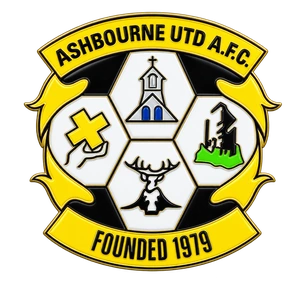
The Ashbourne United crest carries a yellow top ribbon with the club name, a yellow lower ribbon with the 1979 foundation year and a shield divided into black, white, green and yellow panels. The badge includes a cross, a church window shape, a deer and a castle style landmark scene.
The club colours are yellow and black. That colour pairing gives Ashbourne United a strong visual identity, and it also separates the club clearly when families are scanning local match days, training groups and team notices.
| Identity area | Detail |
|---|---|
| Primary colours | Yellow and black. |
| Foundation detail | The crest carries the 1979 foundation year. |
| Local symbols | The badge combines sporting identity with Ashbourne landmark styling. |
| Club name style | Ashbourne United AFC and Ashbourne Utd are both commonly used forms. |
Archerstown football base
Archerstown is the main venue reference for Ashbourne United. The DDSL venue entry places the club at Archerstown with the A84 FD88 eircode, making it the key travel point for visiting families and away teams.
The venue is central to how the club serves the town. Ashbourne United’s player base has grown toward nearly one thousand playing members, so the football base has to support a large school age programme, adult activity, training nights and weekend traffic.
| Venue area | Detail |
|---|---|
| Main venue | Archerstown. |
| Eircode | A84 FD88. |
| Town | Ashbourne. |
| County | Meath. |
Facilities and development projects
Ashbourne United has worked on facility development around Archerstown for many years. Community support, grant support and local backing have helped the club build a strong football setting for a very large membership.
That facilities work matters because the club is not only serving one team. It supports children, teenagers, senior players, coaches, volunteers and families who need safe, organised and reliable football space throughout the season.
Player pathway from youth to adult football
Ashbourne United connects youth football with an adult route. The school age pathway gives younger players a place to learn and compete, while the senior men’s section gives older players a way to continue in the club colours.
The club’s size means player development needs more than one touchpoint. Coaching, registration, team management, welfare, communication and pitch planning all have to work together so players can keep moving through the age groups.
Senior men’s growth
The senior men’s section has grown after several Leinster Senior League cup and league wins in recent years. That growth has increased the need for managers, coaches and trainers who can support a larger adult football setup.
The senior pathway has also been presented alongside improved facilities, match recording and UEFA certified staff. That combination gives players a more serious football environment while keeping the club tied to Ashbourne’s community identity.
| Senior area | Ashbourne United detail |
|---|---|
| Adult route | Senior men’s football provides a pathway beyond school age. |
| Support need | Managers, coaches and trainers are important to continued growth. |
| Football tools | Match recording is part of the developing senior environment. |
| Coaching standard | UEFA certified staff are part of the football setup named by the club. |
Girls football and PDP activity
Girls football is part of Ashbourne United’s development story. A recent PDP 3 activity involved coaches running sessions with Ashbourne United girls from the under 15 and under 16 teams.
That type of activity gives teenage players extra contact time, coaching attention and a club environment that supports girls as they move through important school age years.
Coaching culture
Ashbourne United’s coaching culture has to match the scale of the club. Nearly one thousand playing members means the club needs a steady supply of coaches, helpers and team staff who can keep sessions organised and player focused.
The club’s development language points toward supportive football, player opportunity and a willingness to keep improving. That is especially important in a town where youth football is a major weekly routine for families.
Committee and contact routes
Ashbourne United’s committee structure gives families clear contact points for general leadership, registrations, welfare and finance. Mark Ronan is chairperson, Damien Jameson is secretary, Orla Hally is treasurer, Sinead Webster is registrar and Rowena Daly is child welfare officer.
The secretary route is central for general club questions, while registrar and welfare routes help families find the correct contact for player registration and safeguarding matters.
| Club role | Contact detail |
|---|---|
| Chairperson | Mark Ronan, chairperson@ashbourneunited.com. |
| Secretary | Damien Jameson, secretary@ashbourneunited.com, 086 389 9980. |
| Treasurer | Orla Hally, treasurer@ashbourneunited.com. |
| Registrar | Sinead Webster, registrar@ashbourneunited.com, 086 0554025. |
| Child welfare officer | Rowena Daly, childwelfare@ashbourneunited.com, 086 198 9476. |
Registration and membership
Ashbourne United uses a digital membership route for renewals, club notices and communication. Families should use the club’s membership route when renewing or joining, then follow team messages for training times and seasonal details.
The registrar role is important because a club of this size needs clean membership records, age group allocation and clear communication between families, coaches and league registration requirements.
Volunteers keep the club moving
Ashbourne United’s football scale depends on volunteers. Team managers, coaches, trainers, committee members, welfare contacts, registration helpers and match day helpers all contribute to the club’s ability to deliver football each week.
The senior men’s growth message also shows that volunteer needs are not limited to children’s football. Adult football needs the same attention to planning, coaching, match preparation and communication as the younger pathway.
- Coaching support: Managers, coaches and trainers for growing teams.
- Club operations: Committee, registration, welfare and communication roles.
- Match environment: Helpers who support match day routines and team organisation.
- Community strength: Families and local people keeping a large club active.
Community role in Ashbourne
The club was born from a community moment and still operates as a community football base. Its mission is to give members of the Ashbourne community a supportive place to develop through football.
That role is wider than match day. It includes local identity, friendships, family routine, volunteer contribution and a sense that children and adults can belong to one Ashbourne football structure.
Names and football identity
The club is commonly known as Ashbourne United, Ashbourne United AFC and Ashbourne Utd. Those names point to the same football organisation based in Ashbourne, County Meath.
The club’s identity is also tied to the 1979 foundation year. That date is shown on the crest and gives the modern club a direct link to the first competitive season and the opening Stoneybatter match.
Visiting Ashbourne United
Use Archerstown, Ashbourne, A84 FD88 as the main venue reference for Ashbourne United. Visiting families should still confirm the exact pitch, arrival time and parking plan with their team before travelling.
The map below is centred on Archerstown. It is intended as a venue guide for families planning a first visit to Ashbourne United.