Moone community football since 1989.
Moone Celtic brings girls, boys, academy, youth, senior and over 35 football together at Fortfield Park in County Kildare.
Moone Celtic identity
Moone Celtic FC is a community football club in Moone, County Kildare. The club caters for girls and boys from the early football years up to senior level, with Fortfield Park acting as the football home.
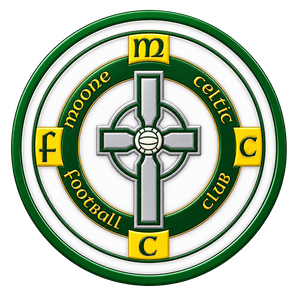
The green, white and yellow crest gives the club a clear local identity. It carries a Celtic cross, a football, the Moone Celtic wording and the four yellow letter blocks that make the badge instantly recognisable.
Founded in 1989
Moone Celtic was founded in 1989 through the work of Liam Doyle, Michael Dooley and the players and volunteers who helped build the club. That origin still shapes the way the club presents itself as a local community football organisation.
A club founded by local football people depends on more than one team. It needs organisers, players, parents, sponsors and grounds volunteers who are willing to keep football active through changing seasons.
Simonstown beginnings
The club established its early home grounds at Simonstown in Moone. That first base gave Moone Celtic a place to organise teams, welcome players and begin building the football habits that later moved to Fortfield Park.
Simonstown matters because it marks the start of the club’s physical footprint. Before any later facilities or honours, the club needed a pitch, a group of players and people prepared to organise football in the locality.
Carlow League origin
Moone Celtic joined the Carlow League under the management team of Joe Keating and Tom Hickey. From there, the club grew year by year and the first team began competing against stronger sides in the league.
The Carlow League years helped establish senior standards for the club. On one occasion, Moone Celtic represented the Carlow League in the FAI Junior Cup, giving the club a wider football milestone beyond ordinary local league play.
Move into Kildare football
Since August 2008, Moone Celtic has played senior football in the Kildare and District Football League, with underage teams in the Kildare and District Underage League. That move became a positive step for the club.
The Kildare move also increased local interest and support. It connected Moone Celtic more closely with Kildare clubs, Kildare families and the football structures that now shape its weekly activity.
Fortfield Park home
Fortfield Park is the current home of Moone Celtic. The ground sits off the old N7 Moone bypass and gives the club a clear base for training, matches and community football.
For visiting teams, Fortfield Park is the practical anchor. Confirm the fixture location before travel, allow time for the rural approach and respect the ground as a shared club space.
Moone and south Kildare setting
Moone Celtic serves a rural Kildare area where a local football club can become a major community connector. The club gives children, teenagers, adults and families a reason to gather around the same football identity.
The ground setting also matters for visitors. Fortfield Park is not a city venue with large parking and transport choices, so simple travel planning and early arrival make match days easier.
Girls and boys from age six
The club describes its pathway as football for girls and boys from age six up to senior level. That wide age span gives local children a way to start young and stay with the same badge as they grow.
A pathway like this is especially valuable in a rural community. It keeps sport close to home and helps families avoid long travel for every stage of football development.
Academy football
The academy gives boys and girls in the youngest age groups a first route into the club. The early stage should be about enjoyment, movement, ball confidence and learning to be part of a group.
For parents, the academy is often the first introduction to Moone Celtic. A good early experience helps children build confidence and helps families understand the club’s standards around attendance, respect and communication.
Girls academy and Playmakers
Moone Celtic has promoted a girls academy pathway, including Disney Playmakers activity for younger girls. That gives girls an age appropriate entry point into football before full team competition becomes the focus.
This matters because girls football grows strongest when young players can start in a welcoming setting. A clear girls entry route helps the club turn interest into regular participation.
Underage team spread
Moone Celtic has organised non competitive and competitive teams across several school age groups. The contact structure has included academy groups, under 8, under 9, under 10, under 11, under 12, under 13, under 14, under 15 and youth teams.
Those age groups show the scale of the underage pathway. The details can move by season, but the club structure is broad enough to support children at different stages of development.
Boys pathway
The boys pathway runs from first academy football into KDUL age groups and older youth football. Players can move from basic skills into more structured football while staying connected to Moone Celtic.
A long boys pathway helps the club keep players through the teenage years. It also creates a local route toward senior football for players who continue developing and want to represent the club as adults.
Girls pathway
Girls teams are part of the Moone Celtic structure, with younger girls activity and school age girls team contacts included in the club setup. This gives girls a visible place in the football community.
For families, that visibility is important. It shows that the club is not only a boys and senior men’s organisation, but a place where girls can start, grow and belong.
Senior men
The senior men’s team connects Moone Celtic’s foundation story with the modern KDFL pathway. Senior football gives older players a competitive route and gives underage players a local adult team to look toward.
The senior team has been part of several important club moments, from the Carlow League period to KDFL honours. That adult presence gives the club depth beyond academy and school age football.
Over 35 football
Moone Celtic has also included an over 35 strand. Masters football gives experienced players a way to keep competing and stay connected to the club after standard senior football becomes harder to sustain.
This strand is valuable in a community club because older players often become helpers, coaches, organisers and supporters. Keeping them active strengthens the wider club culture.
Under 20 and youth bridge
The club contact structure has included under 20 and youth team routes. These stages are important because they help bridge the gap between school age teams and adult football.
Teenage players often need a clear next step. A youth and under 20 pathway can keep more players involved while they move through exams, work, college and the transition into senior football.
KDFL honours
Selected KDFL honours show Moone Celtic competing strongly in adult football. The club name is connected with Division 2 success in 2014, Division 1 success in 2023 and Premier Division success in 2024.
Those honours give the senior section a strong modern story. They also give younger players and families a sense that the club has achieved at several levels of Kildare football.
Recent senior context
Moone Celtic has continued to feature in KDFL senior discussion, including a 2025 senior division focus and a 2026 season preview that framed the club around a reset after a difficult season.
That context is useful because it shows the senior team is still part of the live Kildare football picture. Clubs move through strong seasons and rebuilding seasons, but the structure keeps the pathway active.
Club rules and coaching philosophy
Moone Celtic’s coaching philosophy starts with the idea that children play football to have fun. The club places enjoyment, learning and life skills ahead of counting trophies, goals, wins or losses in young age groups.
That approach is important for parents. It tells families that the youngest players should be developed through age appropriate activity, patience, variety and encouragement rather than pressure.
Age appropriate football
The club rules emphasise age appropriate football so children can understand and play the game at their own stage of development. That includes learning different positions and receiving fair opportunities to take part.
For young players, this is the difference between being pushed too quickly and being allowed to grow. Good underage football should build confidence, skills and decision making over time.
Equal opportunity in games
Moone Celtic’s rules support equal playing time and equal opportunity to learn. This is especially important in the youngest age groups, where every child needs touches, involvement and encouragement.
Equal opportunity does not mean every player develops at the same pace. It means the club is trying to create a learning environment where all players get meaningful chances to improve.
Player welfare
The club rules state that an injured child should not take part in practice or a match. They also state that children should not be left unattended at training or games and should only leave with a responsible person unless permission has been given.
Those details are practical and important. They show that welfare is part of everyday football rather than only a policy on paper.
Smoke free ground
Fortfield Park has a strict no smoking policy, and visitors are asked not to smoke or vape on the premises. The club also asks its own members to help remind visiting teams who may not know the policy.
A smoke free and vape free ground supports a healthier environment for children, families and volunteers. It is a simple rule that helps keep the club setting suitable for young players.
Contact structure
Moone Celtic publishes a detailed contact structure covering chairperson, vice chairperson, underage secretary, treasurer and registration, child welfare, grounds and team contacts.
For families, this structure matters because it gives the club a clearer route for questions. Academy, girls football, school age teams, senior men and over 35 football each have people attached to them.
Child welfare role
The club identifies a child welfare role as part of its contact structure. That gives parents a named welfare route and reinforces the idea that safeguarding is part of how the club operates.
A child welfare contact is especially important in a club with many age groups. Parents should know there is a route for concerns as well as a route for team questions.
Membership and registration
Membership and registration are part of the Moone Celtic pathway. Families should use the club’s registration route, confirm the correct age group and keep contact information accurate for team communication.
Good registration helps coaches and club officers know who is involved, which group a player belongs to and how to reach parents when training or match arrangements change.
Sponsorship and local support
Moone Celtic has a sponsorship and advertising route for local support. In a rural community club, business and family support can help with kit, facilities, equipment and the cost of running teams.
Sponsors are part of the club network because they help make football sustainable. Their support sits beside volunteer time, membership and fundraising as part of the wider club model.
For new families
New families should start with the player’s age, whether the query is about boys football, girls football, academy, youth football or senior football, and whether the player has played before.
That first information helps the club guide the family to the right contact. It also helps parents understand whether the next step is registration, training, a team enquiry or a welfare question.
For visiting teams
Visiting teams should confirm Fortfield Park before travelling, especially where league systems or contacts use slightly different ground wording. The ground is off the old N7 Moone bypass in County Kildare.
Teams should arrive in good time, respect parking and access, follow the smoke free and vape free policy and leave the ground tidy for the next group.
What defines Moone Celtic
Moone Celtic is defined by a 1989 foundation, a rural Kildare football identity, Fortfield Park, the move into KDFL and KDUL football, a girls and boys pathway, senior men, over 35 football and a strong volunteer culture.
For players and families, the club offers a local football home with clear values: enjoyment, fair opportunity, child welfare, community support and a pathway from early football into adult teams.