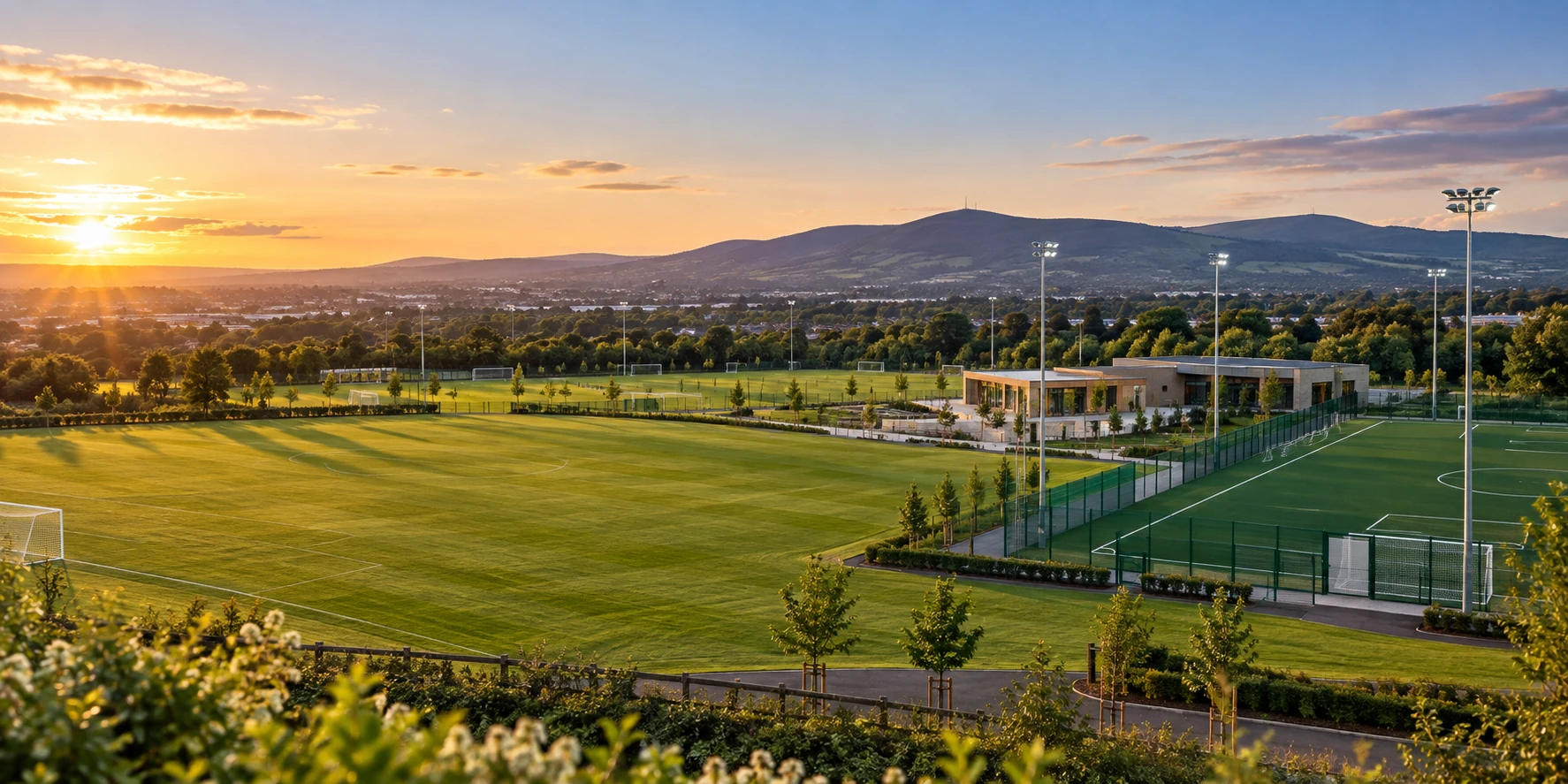
Kingswood · Dublin 22 · Leinster
Shamrock Rovers FC
A historic Dublin club whose Roadstone academy gives young players a route from first touches to elite youth football and the senior game.
Origins
Ringsend beginnings in 1899
Shamrock Rovers traces its beginnings to Ringsend in 1899. The club grew from Dublin football into a national name, carrying green and white hoops and the shamrock symbol through generations of players and supporters.
That history gives a young player a bigger story to step into, but the first experience is still local and personal: a coach learning a child’s name, a teammate making a pass and a family finding its place around the club.
Club identity
The hoops and the shamrock
Green and white are more than colours at Rovers. The hooped shirt, the shamrock and the football on the crest create an identity that is recognised across Irish football and carried by every age group.
For academy players, wearing the badge comes with a simple responsibility. Work hard, treat people well and understand that the shirt connects the day’s training to a long line of teams who represented Dublin.
A Dublin journey
Ringsend, Milltown and Tallaght
Rovers’ story has moved through three important Dublin places. Ringsend is the beginning, Milltown is remembered as the home of many celebrated teams and Tallaght is where the modern club has built its strongest community base.
That movement was not always easy. The loss of Milltown in 1987 began a difficult period of changing grounds, but supporters kept the club alive until a permanent Tallaght home became possible.
Senior football
Tallaght Stadium
Shamrock Rovers’ senior teams play at Tallaght Stadium, where the club has been based since 2009. Match nights bring the history of the Hoops into a South Dublin setting shared with a large and growing community.
The stadium is a match venue rather than the youth training base. Families attending a senior fixture should follow the match arrangements for Whitestown Way, while academy families should use the instructions for Roadstone.
Academy home
Roadstone, Kingswood
The Shamrock Rovers academy is based at Roadstone Sports and Social Club in Kingswood, Dublin 22. The address associated with the academy is D22 FH98, with training areas, changing space and indoor facilities supporting the club’s youth programme.
Roadstone is a working football environment rather than a drop-in public park. Players and visitors should attend for an arranged session or fixture and follow the staff directions for entry, parking and pitch access.
A connected pathway
Many age groups, one football environment
Roadstone brings younger development groups, DDSL teams, national underage squads and senior training into the same club environment. Players can see different stages of the pathway around them and understand that improvement is built through daily habits, not one trial or one match.
The setting also lets coaches share ideas across age groups. A child may start with simple ball work, then progress towards more demanding decisions, faster play and greater responsibility as they grow.
First touches
Development Academy for ages five to seven
The Development Academy offers boys and girls aged five to seven a safe, enjoyable introduction to football at Roadstone. Sessions focus on movement, ball skills, teamwork and confidence before the older academy pathway begins.
Families can read the Development Academy information before making contact. A first visit should feel like an invitation to explore the game, not a judgement on a child’s ability.
Grassroots football
DDSL teams and local competition
Rovers’ schoolboy and schoolgirl sections play in the Dublin and District Schoolboys’/Girls’ League, giving young players regular fixtures against clubs from across the county. League football teaches the practical parts of the game: preparing for a weekend, sharing a pitch and responding to different opponents.
Team places and age groups change with each season. Parents should ask the academy which section fits the player’s date of birth, experience and current availability rather than assuming that every group is open at the same time.
Boys and girls
A route that welcomes ambition
Shamrock Rovers’ pathway includes boys’ and girls’ football, with youth teams moving from local competition towards national underage programmes. The club’s women’s development is part of that wider story, giving girls a visible route through the game and towards senior football.
Not every player will follow the same line. Some will want the highest competitive challenge, some will value the friendship and routine of a team and others will discover a future in coaching, analysis or community work.
National pathway
From youth football to the first team
The academy’s aim is to help players move through appropriate stages of development, including national underage competition and the senior game. That route is demanding, but it is also clear: learn the basics well, become dependable for teammates and keep improving when the level rises.
Selection is only one part of the journey. A strong academy also gives players habits that travel with them, whether they continue into senior football, another club, coaching or a lifelong connection with the sport.
Player development
Football alongside education
Older academy players need more than extra sessions. They need support with time, study, recovery and the pressures that come with growing up. Rovers has built education and development arrangements around the football programme so teenagers can keep learning away from the pitch as well as on it.
The goal is a well-rounded young person. Technical ability matters, but so do punctuality, communication, resilience and the capacity to work within a group.
A lasting standard
Graduates make the pathway visible
Shamrock Rovers has helped develop players who went on to senior football and international careers, including Gavin Bazunu. Those names are memorable, but the wider value of the academy is found in the many players who become better teammates, more confident people and committed members of their communities.
Every age group contributes to that standard. A younger player sees older teams training, while older players learn that their example matters to the children following behind them.
Partner clubs
Sharing coaching beyond Roadstone
Rovers works with partner and affiliate clubs, bringing coaches together to share ideas and help local teams improve. That network widens the club’s reach without asking every young player to leave their neighbourhood before they are ready.
Good partnership means listening first. Clubs have different facilities, volunteers and community needs, so useful coaching support should strengthen the local environment rather than replace it.
Coaches
The people behind the badge
A modern academy depends on coaches, welfare staff, administrators, grounds teams and volunteers. They plan sessions, keep children safe, communicate with families and make sure the football day works before players step onto the pitch.
Players can help by arriving prepared, listening carefully, respecting officials and taking care of the facility. Those small behaviours are part of becoming a Shamrock Rovers player.
Joining
Start with the right route
Families interested in the academy should include the player’s date of birth, football experience, preferred contact details and the kind of football they would like to try. The club can then explain whether the best next step is Development Academy, a DDSL section, an open session or another route.
The Shamrock Rovers Academy information sets out the wider pathway. Ask before travelling, as Roadstone access, session times and team arrangements can change.
Safe football
High standards with care
Competitive football should still feel safe, supportive and age-appropriate. Coaches and adults around the teams share responsibility for listening to children, preventing bullying, respecting boundaries and keeping the touchline constructive.
Parents can help by praising effort, letting coaches coach and making it easy for a child to speak up when something feels wrong. A player develops best when challenge and care sit together.
Two destinations
Know which ground you are visiting
Tallaght Stadium is the senior match home. Roadstone is the academy and training base. Youth fixtures can also be assigned to other grounds, so the team message should always be checked for the correct pitch, time, entrance and parking arrangement.
Arrive early enough to settle a young player, keep access routes clear and follow the directions of academy staff. Roadstone is shared by many groups, and considerate visitors help the whole facility run well.
Community
A club with a place in Tallaght
Rovers’ move to Tallaght created more than a stadium address. It placed a historic club in a community where schools, families, volunteers and local organisations could meet the Hoops in everyday life.
That connection is carried through academy sessions, partner clubs, community work and senior match nights. The club’s story is strongest when the first team and the youngest player are seen as part of the same football family.
The next generation
Keep the Hoops moving forward
Shamrock Rovers links a Ringsend beginning, a Milltown memory and a Tallaght future. Roadstone gives that history a daily setting where young players can learn, compete and imagine what the next stage might be.
For a new family, the next move is simple: choose the right academy route, confirm the Roadstone details and arrive ready to learn, contribute and enjoy football in green and white.